
Insurance Ordered Demolition for Fire-Damaged Melbourne Properties
July 27, 2026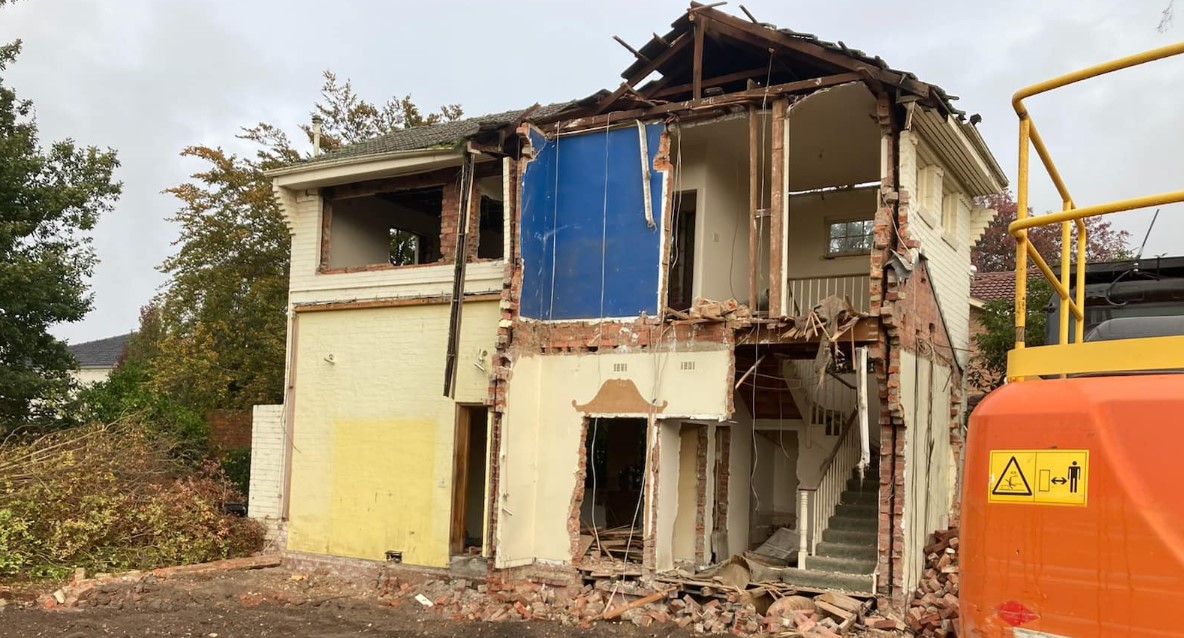
Plan insurance ordered demolition for fire-damaged Melbourne properties with documented scope, safe site clearing and coordinated service capping.
Insurance ordered demolition removes damaged structures after the authorised scope, site hazards and required approvals have been established. Owners should not treat it as ordinary site clearing: fire damage can leave unstable materials, contamination and live services.
What Is Insurance Ordered Demolition?
Insurance ordered demolition is demolition undertaken as part of an insurer-managed or claim-approved response to a damaged property. The scope may involve complete demolition, partial removal or clearing selected structures so the site can proceed towards rebuilding. Responsibility for approvals, engineering advice and claim authorisation depends on the project.
Simcat Group lists fire-damaged and insurance ordered demolition among its Melbourne services. The team also undertakes residential and commercial demolition, partial demolition, asbestos removal, service capping and total site clearing, allowing related work to be discussed as one project scope.
What Must Be Confirmed Before Demolition Starts?
A written scope helps prevent a gap between what the insurer authorises and what the demolition quotation includes. Before work is booked, clarify the following.
- Authority to proceed: obtain the insurer’s or appointed representative’s written direction and confirm any exclusions.
- Retained structures: identify whether any walls, slabs, outbuildings or site features must remain protected.
- Hazardous materials: arrange the required assessment where asbestos-containing materials or fire-related contamination may be present.
- Services: confirm requirements for sewer and stormwater capping and the isolation of electricity, gas and water.
- Waste and evidence: establish whether any material must be retained for investigation before removal and disposal.
Why Fire-Damaged Sites Need a Controlled Scope
Fire can alter the stability of structural elements and make access unpredictable. Water used during firefighting can also affect debris, internal finishes and site conditions. Demolition sequencing and machinery selection therefore need to reflect the assessed condition of the building, neighbouring assets and available access.
Do not promise that demolition will “eliminate liability” or guarantee an insurance outcome. The demolition contractor performs the agreed physical work; claim decisions, structural advice and statutory approvals remain with the relevant parties. WorkSafe Victoria provides general demolition safety guidance for duty holders and contractors.
Coordinate Clearing With the Rebuild Program
Ask whether the quotation covers demolition only or extends to rubbish removal, vegetation removal and final site clearing. Simcat Group’s total site clearing and rubbish removal services may help prepare the property for the next approved stage, but the required finish should be stated clearly.
Programme assumptions should also be documented. Insurer approval, authority permits, utility disconnections, hazardous-material clearance and access restrictions can affect the start date independently of the demolition contractor. A realistic sequence protects the rebuild programme from dates based on incomplete approvals.
Request a Site-Specific Demolition Quote
Send Simcat Group the property address, available reports, authorised scope, photographs and details of structures to remain. A site-specific review can identify access constraints and connected services before the quotation is finalised. Clear documentation reduces assumptions and gives insurers, owners and builders a firmer basis for scheduling the next stage.
Optimized by: Netwizard SEO